Commercial Roofing Services
Roof Recover & Overlay Systems in Midland, TX
Recover and Overlay Systems for a Market With Fast Building Turnover
Recover and overlay work makes up a real share of what we do around Midland, where buildings change hands, get re-tenanted, or get repurposed fast as the oil-price cycle turns. Installing a new roof system over an existing one — rather than a full tear-off to bare deck — saves time and cost when the existing substrate can actually support it, and knowing when that's true is the whole job.
Why This Market Produces So Many Recover Candidates
Buildings around Midland change use and ownership on a faster cycle than a lot of markets, tracking energy sector ups and downs. An office building might sit half-vacant during a downturn and get fully re-tenanted within a year when activity picks back up, and that turnover often triggers roof work on a compressed timeline where minimizing downtime matters as much as long-term cost. A recover, done right, gets a building back in service faster than a full tear-off while still delivering a code-compliant, warrantable roof system.
Oilfield service buildings see similar turnover — a facility built for one operator's equipment gets repurposed for another company's needs, sometimes with different roof loading or drainage requirements than the original design anticipated. Recover projects here often come paired with tapered insulation work to correct drainage that the original pre-engineered building never had right in the first place.
What Actually Qualifies a Roof for Recover
Not every existing roof is a good recover candidate, and we're direct about that even when a recover would be the cheaper, faster answer a client wants to hear. The deciding factors:
- Existing deck and insulation must test dry — trapped moisture under a new membrane never dries out and keeps degrading both layers
- Structural capacity to support the added weight of a new membrane and insulation layer, particularly relevant on older BUR roofs with gravel ballast already adding significant dead load
- Existing drainage slope, since a recover is the right moment to add tapered insulation if ponding has been a chronic problem
- Code requirements limiting the number of existing roof layers allowed before a tear-off is mandated regardless of condition
- Flashing height at parapets and curbs, since a recover raises the roof surface and can compromise flashing clearance if not accounted for
A moisture survey — infrared scan or capacitance meter readings across the field — is standard on any recover evaluation we do, not an optional add-on. Skipping that step is how a recover project turns into a callback within a couple of years when trapped moisture starts showing up as blistering or delamination.
Tapered Insulation and Fixing Drainage During Recover
A recover project is the natural point to correct chronic ponding, since the roof is being opened up for new insulation anyway. We design tapered insulation systems to redirect water to drains or scuppers that may have been undersized or poorly located in the original construction — common on pre-engineered metal buildings converted to low-slope use, where drainage was never the priority in the original design.
Getting the taper design right means understanding where water actually collects on the existing roof, not only assuming a uniform slope will fix it. We map ponding patterns during the initial roof walk, often confirmed by staining or debris patterns from prior rain events, before finalizing a taper layout.
Membrane and System Selection for a Recover
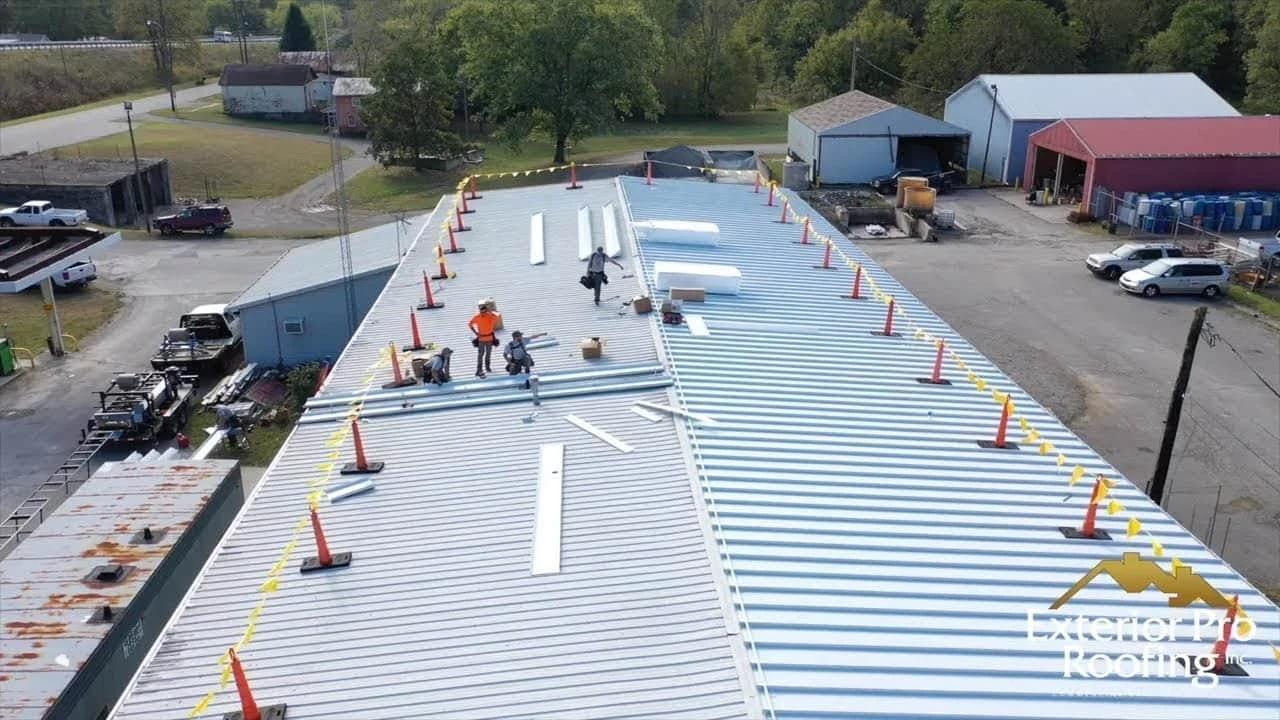
The new membrane or panel system for a recover follows the same wind exposure, UV, and chemical resistance logic we apply to any new install in this market — a TPO or PVC recover over an existing BUR roof still needs fastening patterns matched to the building's exposure category, and a metal panel recover over an aging R-panel roof still needs attention to purlin condition and fastener spacing. The recover doesn't lower the bar on any of those decisions; it just changes what substrate we're building on top of.
On buildings with a compressed re-tenanting timeline, we sequence recover work to minimize disruption to ongoing operations below, which matters more here given how many of these projects happen on a business's active schedule rather than during a planned vacancy.
Questions About Recover and Overlay Projects
How do you know if our roof qualifies for recover instead of full tear-off?
A moisture survey of the existing deck and insulation, a structural load check, and a review of how many roof layers are already in place and what code allows. We won't recommend a recover over a wet or overloaded substrate just because it's the faster option.
Can recover fix a roof that's had ponding problems for years?
Often, yes — a recover is a good opportunity to add tapered insulation and correct drainage that was never adequate in the original construction, particularly on converted metal buildings.
Is recover cheaper than a full tear-off?
Usually, since it avoids disposal costs and deck-level labor, but it's only appropriate where the existing substrate is dry and sound. A recover over a compromised deck costs more in the long run than doing the tear-off correctly the first time.
Does a recover work on a metal R-panel roof, or just membrane systems?
Yes — metal roofs get recovered too, either with a new panel system over the old one or with a membrane overlay, depending on structural and drainage considerations. See our R-panel page for how existing fastener condition factors into that decision.
How fast can a recover be completed compared to a full replacement?
Recover projects generally move faster since there's no tear-off and disposal phase, which matters on buildings with a tight re-tenanting or reopening timeline tied to this market's fast building turnover.