
Service Areas
Commercial Roofing Contractors Big Spring, TX
Commercial Roofers in Big Spring, TX
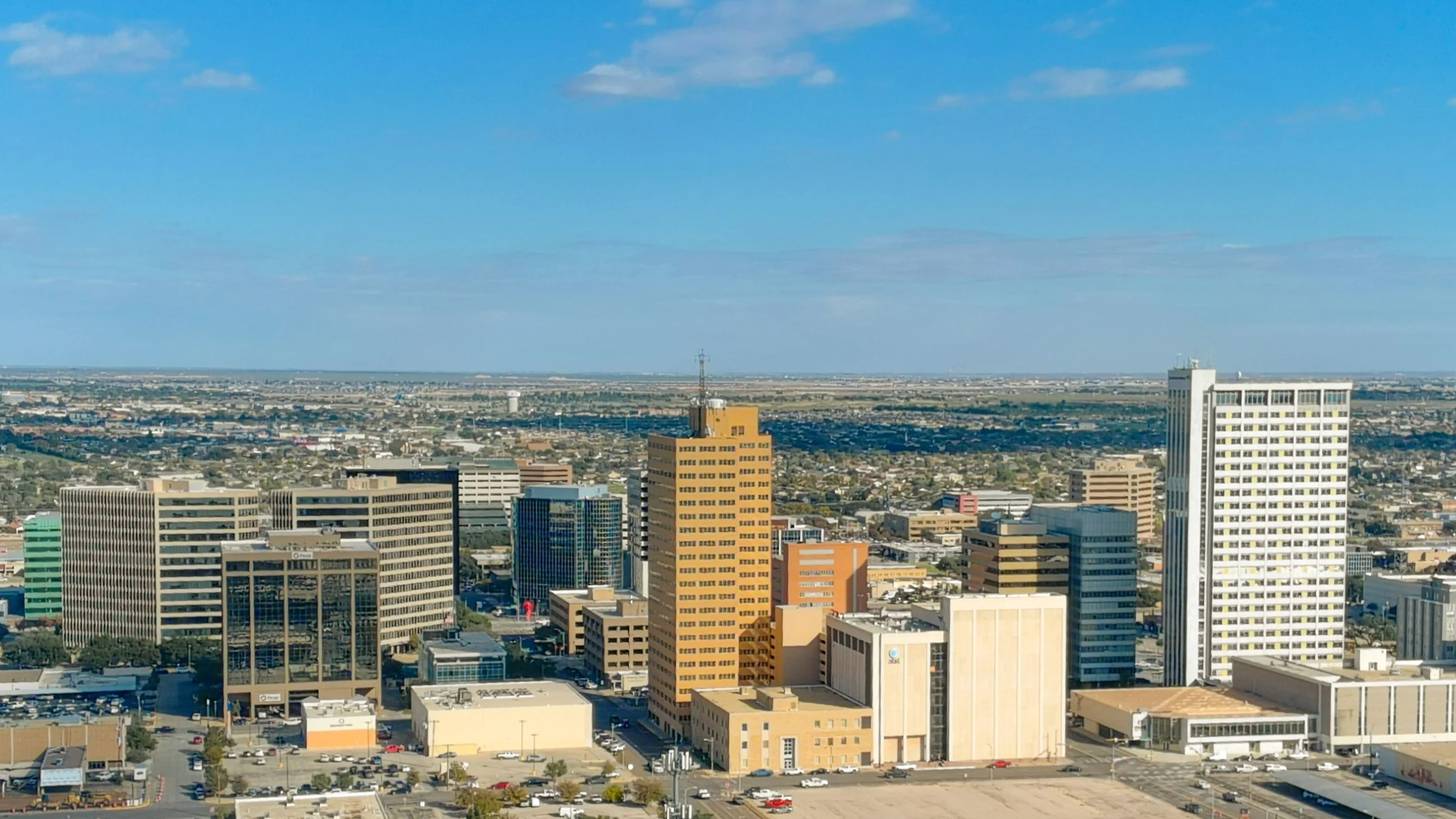
Commercial roofers serving Big Spring, TX should document leak sources, wet insulation, drainage, edge details, penetrations, and repair history before recommending a scope. Big Spring runs on a refinery, a hospital campus, and the I-20 corridor of retail and light industrial buildings strung between them, and each of those three building types puts a different set of demands on a low-slope roof. What works on one doesn't automatically make sense on the others.
Hydrocarbon Exposure and Membrane Chemistry Near the Refinery
Asphalt-based systems, built-up roofing and modified bitumen alike, are vulnerable to plasticizer and solvent attack from hydrocarbon vapor drift and occasional condensate exposure. Buildings sitting downwind of refining operations see that kind of chemical exposure more consistently than buildings a mile away on the other side of town.
PVC membrane has a well-established track record resisting oils and greases, and its welded seams plus that chemical resistance together make it a common choice near petrochemical operations. TPO handles UV and ozone exposure well but has a shorter track record under sustained hydrocarbon contact, which matters more the closer a building sits to the plant. A silicone coating resists ponding and adds reflectivity, but it isn't a substitute for a chemically resistant base membrane where solvent exposure is real, and the right call depends on the building's actual distance and position relative to prevailing wind off the plant rather than a single rule applied across the whole town.
Rooftop equipment adds a second layer to this decision. Curbs, ductwork, and any exposed metal trim near a refinery see the same vapor exposure as the membrane itself, and specifying a coating or paint system for that hardware that matches the membrane's chemical resistance keeps the whole assembly aging at roughly the same rate instead of the trim failing years before the field membrane does.
Reroofing a Hospital Campus Without Interrupting Critical Space
A hospital campus reroofs in sections tied to a life-safety and infection-control plan, not on a contractor's preferred sequence. Opening the roof deck above a space with negative-pressure air handling or sensitive equipment below it requires dust and debris containment that a standard commercial reroof doesn't need to think about.
Documentation matters more here too: product data sheets, submittals, and warranty paperwork feed into the facility's own compliance and insurance records, which is a different standard than a warehouse owner filing a receipt. We build a full documentation package into a hospital-campus reroof from the start rather than assembling it after the fact when a surveyor or an insurer asks for it.
Access logistics matter as much as the technical spec. Material staging, crane placement, and debris chutes all have to route around ambulance bays, patient drop-off, and whatever access the campus has already designated for construction traffic, and none of that can interfere with emergency vehicle movement at any point during the project.
I-20 Retail and Industrial Strip: The Volume Business
The I-20 corridor's retail and light-industrial roofs run simpler: TPO over metal deck, tapered insulation cut to drain toward scuppers, and a straightforward reroof cycle once the membrane reaches the end of its service life. Volume and turnover matter more here than on the refinery or hospital side of town, and owners are usually making a budget decision, which means an accurate condition report matters before they commit money.
West Texas storm cells that roll through along I-20 bring both wind and hail, and documenting that damage factually, without promising a claim outcome, is part of getting an owner's insurance paperwork in order before the adjuster shows up.
- Membrane exposure relative to plant emissions and prevailing wind direction
- Existing insulation moisture content, checked with core cuts
- Condition of drains and scuppers
- Base flashing condition at penthouse and mechanical curbs
- Hail bruising on a granule-surfaced cap sheet
- Whether the current wind uplift rating still matches the building's exposure category
What We Check First on a Big Spring Reroof Estimate
Every estimate starts with the same core cuts and drainage check regardless of which of the three building types it is, because moisture already trapped in the insulation changes the entire scope of the job before membrane selection even enters the conversation. A wet core sample almost always means the insulation gets replaced along with the membrane, which changes both the price and the timeline an owner should plan around.
From there the estimate splits by building type: chemical exposure and prevailing wind for anything near the refinery, phasing and containment requirements for the hospital campus, and straightforward drainage and wind-uplift verification for the I-20 retail and industrial strip.
Common Questions from Big Spring Property Owners
Does a roof near the refinery really need a different membrane than one across town?
If the building sits downwind of hydrocarbon vapor or occasional condensate exposure, yes. A chemically resistant membrane like PVC holds up to that exposure in a way an asphalt-based system generally doesn't.
Can a hospital roof be replaced in sections while the building stays open?
Yes, that's the standard approach, sequenced around the facility's life-safety and infection-control requirements rather than a standard contractor schedule.
What should we ask for in a roof inspection report before budgeting a reroof?
Insulation moisture readings from core cuts, drain and scupper condition, and a clear statement of remaining membrane service life. A visual walk-through alone doesn't tell you what's happening inside the assembly, and that's usually the part that actually decides the budget.
Does hail damage always show up right away on a low-slope roof?
No. Bruising on a granule-surfaced membrane can be subtle at first and worsen over months as UV works into the exposed spots, which is why a documented post-storm inspection matters even if the roof looks fine from the ground.
Will you help us document storm damage for an insurance claim?
Yes, we provide factual inspection documentation and photos of the damage. We don't make promises about how an insurer will rule on a claim.